Get me outta here!

Monday, February 10, 2014

Towards an ASEAN Community

                   
The official flag of the ASEAN
image from:
 http://www.aseanic.org/_uploadedfile/images/asn-sli-1349145587-asean-logo-dalam.png
For the past few weeks, news about the ASEAN integration is all over the headlines. Besides the adjustment of Academic calendar by different universities to cope with our fellow ASEAN neighbors (which until now receives various reactions), a bigger project is about to unveil this 2015-The ASEAN Community. This essay aims to inform its readers on the ASEAN Community particularly, the ASEAN Economic Community 2015.  

                The Association of Southeast Asian Nations (ASEAN) is a regional organization founded on August 8, 1967 in Bangkok, Thailand. The signing of the Bangkok Declaration in 1967 by its founding members including Indonesia, Malaysia, Philippines, Singapore and Thailand established the organization along with its aims of facilitating greater cooperation in different issues within the region. Today, there are ten member states comprising ASEAN. The new member states of the organization are Brunei Darussalam (1984), Vietnam (1995), Lao PDR (1997), Myanmar (1997) and Cambodia (1999).
The current member states of ASEAN
image from:http://en.aectourismthai.com/images/blog/content1/20130207115027.jpg

                From the official website of the organization (see http://www.asean.org/asean/about-asean), each ASEAN member state adopts the following fundamental principles stated in the Treaty of Amity and Cooperation in Southeast Asia (TAC) of 1976.
1. Mutual respect for the independence, sovereignty, equality, territorial integrity, and national identity of all nations;
2. The right of every State to lead its national existence free from external interference, subversion or coercion;
3. Non-interference in the internal affairs of one another;
4. Settlement of differences or disputes by peaceful manner;
5. Renunciation of the threat or use of force; and
6. Effective cooperation among themselves.
   
                Although many countries thought that the organization will not survive, ASEAN managed to stand different challenges and resolve some differences within the region through time. As part of its future plans, the organization established a vision for the region named as the ASEAN Vision 2020. In this vision, the member states agreed to create an ASEAN Community by 2020 that will further strengthen the ties among the relations of each member states. This ASEAN Community comprises three pillars which are the ASEAN political-security community, the ASEAN Social-Cultural community and the ASEAN Economic Community. Each of the three-pillars is explained further in their respective blueprints. (See http://www.asean.org/asean/about-asean for each pillar’s blueprint)
                In the 12th ASEAN Summit held in Cebu, Philippines last January 2007, the organization decided to hasten the establishment of the ASEAN community, originally by 2020 to 2015. The said agreement is signed by member states in the Cebu Declaration on the Acceleration of the Establishment of the ASEAN Community by 2015. The declaration contains the acknowledgement of ASEAN member states towards establishing a single ASEAN Community in order to address common issues like security and economic development.

The ASEAN Economic Community

The ASEAN Economic Community map
image from: http://thumbs.dreamstime.com/z/asean-economic-community-aec-31019063.jpg
                This 2015 marks the launch of one of the Pillars of the ASEAN Community-the ASEAN Economic community. In accordance to the Bali Concord II signed in Bali, Indonesia last 2003, the region, by 2015 will transform into a single Common Market and production base which aims to make a “highly competitive economic region, a region of equitable economic development, and a region fully integrated into the global economy”. In 2007, the meeting of different Economic ministers from each member states in Kuala Lumpur, Malaysia created the blueprint for this envisioned Economic community that identifies five core themes: (i) free flow of goods (ii) free flow of services (iii) free flow of investments (iv) free flow of capital and (v) free flow of skilled labor. Along with these components are the priority integration sectors and food, agriculture and forestry.
                In International Relations, a common market is a type of a Regional integration Agreements (RIA’s) which states engaged in order to enhance cooperation. A common market is defined as “the removal of tariff and non-tariff barriers plus, a common external tariff against non-member countries” (Layador,2014). In addition, a Common Market includes a “free movement of capital, labor and services” (Layador,2014). If we can remember, this is not the first time that a regional organization decided to come up with the vision of a ‘community’ higher that the state called the region. This is exemplified in the case of the European Union (EU). Each of the 28 member states adopted not just a common market but entered into an Economic and Monetary Union wherein states share a common economic and monetary policy (ex. Inflation target rates, single currency, investment policies and a common central bank) except for Great Britain who opt not to adopt the Euro currency and remain to use pound.
                   After defining what a common market is, we now move into some of the challenges or problems it may create. One possible problem is the “inconvenience and transactions costs of navigating through a big regional market with different currencies.” (Layador, 2014) This is exemplified in the early years of the European Union (EU) until 1992 upon the signing of the Maastricht Treaty which created the Euro currency. Before the treaty, all member states use different currencies in buying goods and services which are highly costly. Another problem posed by this integration is the transition period to a single common market. While it promises a highly competitive, monopoly-free markets, the possibility of local business and industries that previously enjoy national protection or subsidy might incur loses and struggle to compete against the international market in this period. Of course, these possible challenges are just possibilities. We are yet to find the effects of the Economic integration in 2015.

                     Are we ready for a regional integration? Although the idea of an 'ASEAN Community' is not that bad at all, we still need to look at the possible advantages and disadvantages of this event. After all, regional integration is not just a socio-cultural or economic phenomena. It is a political event that may somehow affect the future of each member states within the region.   


References:
The Euopean Union official Website:  http://europa.eu/legislation_summaries/institutional_affairs/treaties/treaties_singleact_en.html

ASEAN official website: http://www.asean.org/asean/about-asean

Lecture Handouts in Political Science 187- Special topics in international relations : regionalism-multilateralism

East African Community official website : http://www.eac.int/commonmarket/benefits.html

Sunday, February 9, 2014

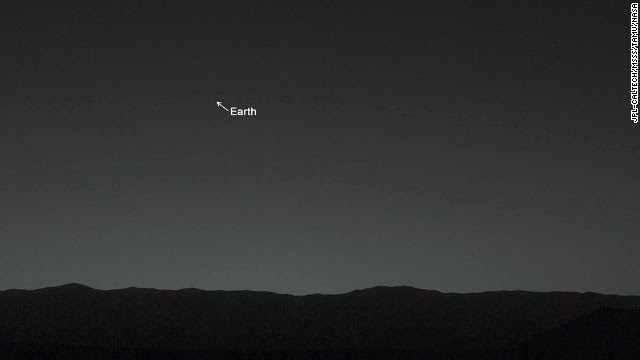
Smile! A Picture from 100 Miles Away, and Up, Up We Go

What does Earth look like as seen from a 100 miles away?

            NASA has the answer. This February, Curiosity, a rovers in Mars shot a picture of Earth and send it back to  NASA. NASA tweeted the photo that was sent by the rover via twitter. It is a success for the rover that was attempting to take a clear picture of the Earth for a few months now but to no avail. Now, with the technology of editing camera and its reception of light, Curiosity has successfully pictured Earth from Mars.

But what does this success implies?

            Space exploration is just at the beginning of its career. There are yet millions of planets and stars to be discovered. The success of the Curiosity proves that our technology is continuously developing to further discover the unknown. With this continuous development, we are on the right track to broaden our body of knowledge about the universe.

How would this development affect people?

           Virgin Galactic is developing a technology that would cater to layman. The company is developing an air-spacebourne vehicle that will bring tourists to the moon by 2043. Before, people have to undergo rigorous training and studying just in order to get to space. But in a few years time, the access to universe, if successful, will be available even to the ordinary people. We are bringing the universe closer to the people.

What is the bigger picture?

           With the success of these technologies, we are able to involve people more into science. People become aware of the things that sometimes, they don't care about. If these scientists will be able to bring the knowledge to ordinary people, people can start appreciating science more.

Source: CNN
http://edition.cnn.com/2013/12/09/tech/space-tourism/index.html?iid=article_sidebar
http://edition.cnn.com/2014/02/06/tech/innovation/mars-curiosity-earth-image/index.html


Friday, February 7, 2014

A Higgs Boson We Cannot Unsee

Andre David of CERN giving his lecture on the Higgs Boson
at the CS Auditorium, UP Diliman last January 29, 2014

It all started with the discovery of fire. Then the candle was invented and through applied research man was able to utilize the use of animal fat and bee’s wax to create oil lamps, which then led to the discovery of electricity where the invention of light bulbs came about. Upon further research, carbon filament, Tungsten filament and inert gas filling came about. Electrical discharges in gases, known as plasmas were discovered and then came the invention of the fluorescent tube and recently, light emitting diodes (LED) were discovered and thus, LED light bulbs were invented. Without these discoveries, there will be no inventions. Discoveries enable inventions that can be ubiquitous which means that it is widely used and its presence is extensive. Without fire, there will be no candles, and without candles there will be no electricity and without electricity it is most likely that there will be no gadgets and appliances. These discoveries are shaped by society as it is hinged on the perceived value for man. Discoveries more often than not stem from research with no direct practical purpose, no immediate profit or gain, no clear path ahead and often have no support from society. But clearly enough, these discoveries have risen to very important facets in history. It is thus imperative that in order to make discoveries, societies must invest on and support diverse research.

The European Organization for Nuclear Research
known as CERN is a European research organization whose purpose is to operate the world's largest particle physics laboratory. Established in 1954, the organization has twenty European member states plus Israel, the first non-European country granted full membership1 CERN is the birthplace of the World Wide Web which enables data and information sharing across the world possible. Other notable achievements of CERN include making GIS (geographic information system) data available on the grid. They have also developed Disaster Management schemes through planning of camp sites, aid routes and airstrip placements. Open access publishing was made available and granted anybody, anywhere and anytime access to CERN’s publications. Medical imaging in the forms of x-rays, positron emission tomography (PET) which is a more effective method in locating and viewing malignant lumps in the breast through PET mammography. CERN has also developed Medical Therapy methods, such as the Hadron therapy which is used in hospitals used to treat certain diseases. Climate forcings were also conceived and state of the art cloud chambers and cosmic rays were created. Cancer treatment is also an achievement of CERN through the development of superior technology.

 The Higgs boson is an elementary particle recently discovered in CERN in 2012. It is an important discovery because it confirms the existence of the Higgs field. Just right after the big bang, the Higgs field had zero mass but as the temperature fell and reached a certain critical temperature, it grew and all particles interacting with the Higgs field gained mass. Particles such as the photon that do not interact with the field gained no mass. The Higgs boson or Higgs particle is the visible representation of the field, but whether or not the Higgs boson is the one predicted by the Standard Model, we are yet to find out. Support and investment in research is indeed important as research and discoveries lead to inventions and again inventions are of great value to man.

References:
[1] http://en.wikipedia.org/wiki/Higgs_boson

[2] http://home.web.cern.ch/about/physics/search-higgs-boson

Friday, January 31, 2014

Big data, long data, and history

Advances in all fields of knowledge have lead to a massive bulk of collective information, incredibly apparent enough that we have come to call this time we live in as the Information Age. Much premium is given nowadays to  big data, which are basically massive collections of data sets. It is helpful in studying any field, in doing business, in solving crimes, and probably in any intellectual work. With advancements in technology, working with enormous amounts of data is made possible, and many are now taking advantage of this. 

"But no matter how big that data is or what insights we glean from it, it is still just a snapshot: a moment in time." wrote Samuel Arbesman in an article where he argues that people are focusing too much on big data and that we should give more attention to long data, datasets that have "massive historical sweep", cutting across a huge span of time. This way we choose not to ignore changes (both gradual and drastic) that inevitably occur leading to the current issues of concern. For example, if I wish to understand a certain community, I would not make conclusions about their way of life with just observations of their present circumstances and everyday activities. Peering deeper into their past in a long timescale would give me a clearer and much complete understanding, because I would have answers to 'why' and 'how' questions. In a much more recent article, Arbesman wrote about a return of history at long timescales. A recent trend has caused many historians to deal with big datasets in short timescales. He highlights the importance of long timescales in history, that it does not only help us see slow changes in history, but also the fast developments as well. A longer timescale does not imply ignorance to events of short spans of time, but rather, it provides a richer context to any event within it. Therefore, it is crucial for us not to turn a blind eye to events in the past, including the not-so-immediate past.

The bulk of data about the whole universe will continue to increase and bodies of knowledge will keep growing bigger, but time will only move forward and longer.    

I end this post with a quote from Arbesman's article:
"Because as beautiful as a snapshot is, how much richer is a moving picture, one that allows us to see how processes and interactions unfold over time?"

Friday, January 24, 2014

Whenever the weather gets weird…

Image taken from http://img3.allvoices.com/thumbs/
image/609/480/70109512-cold-weather.jpg
It’s 6:30 AM: time to wake up for your class. As much as your mind tells you to get up, however, your body teases you to stay in bed.

“It’s cold; the weather’s perfect; just a few minutes more”…

…and before you know it, you’re a few minutes off schedule.

Very seldom do we experience this kind of cool air here in the Philippines. At temperatures dropping to as much as 18 degrees Celsius (8 degrees in Baguio), the weather sure is weird. We just don’t get that much chilliness here.

Whenever the weather gets weird, scientists make sense of this as looming signs that global warming is in the works. The case of the super typhoon Yolanda, the polar vortex in parts of the United States, and the extreme weather conditions we are experiencing right now are just a few of the evidences behind the claims of global warming.  

Reactions regarding these “symptoms”, though, are varied depending on the case. While the super typhoon Yolanda was dreadful, the cold January weather is enjoyed by some because of the rare breezy sensation that the weather brings to them.   

Nevertheless, we must bear in mind that this could all be a delusion. The enjoyable weather might be masking another weather phenomenon that is something bigger and catastrophic. We must be prepared.    

-by Juan Miguel C. dela Cruz, 2010-27633